How to Stop Cash on Delivery Returns
Practical ways to stop failed deliveries, verify phone numbers, and save thousands in two-way courier fees.
Key Takeaways
- Unaccepted COD deliveries cost merchants between 450 and 700 LKR in two-way courier return charges.
- Over 70% of failed deliveries happen because the delivery driver cannot reach the customer on the phone.
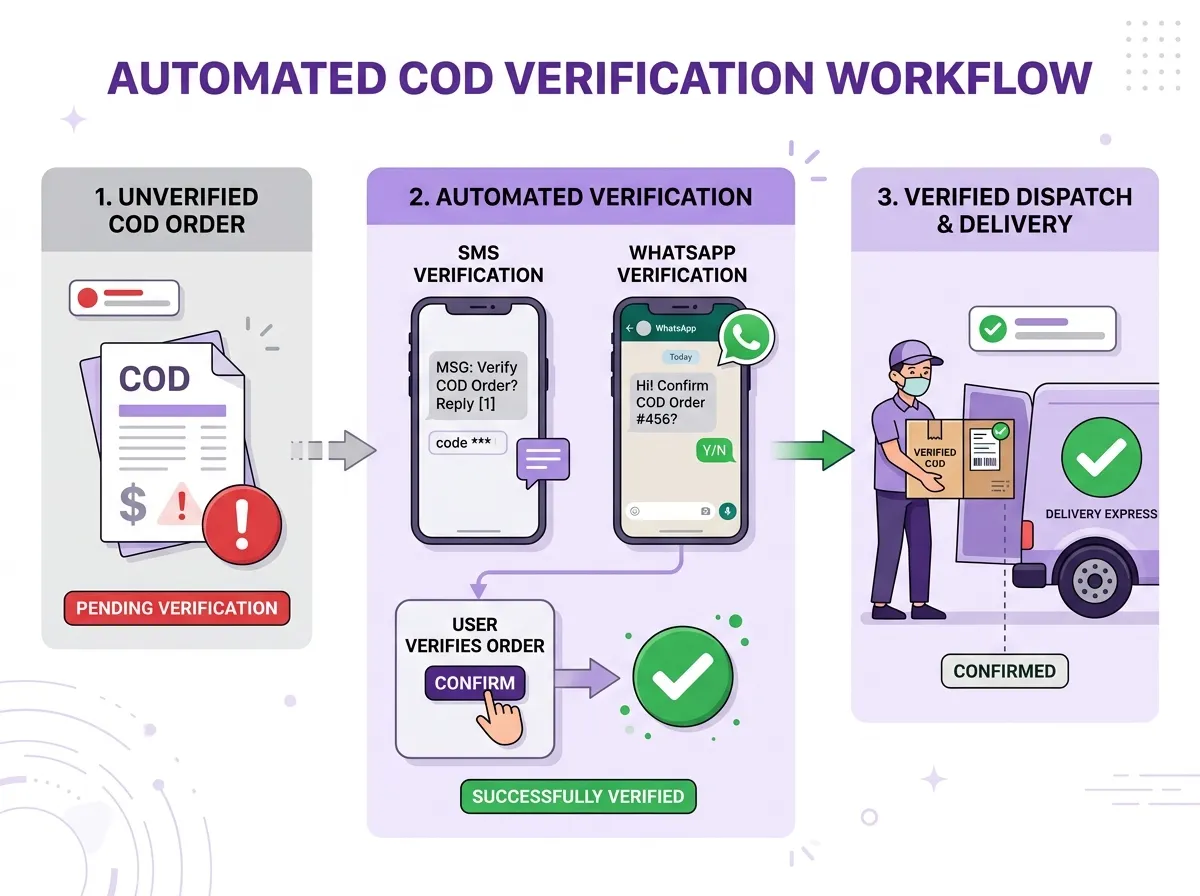
- A simple automated WhatsApp or SMS confirmation before dispatch cuts return rates by nearly half.
- Clear delivery timelines on product pages prevent customer cancellation caused by unexpected delays.
The real cost of a returned parcel
Cash on Delivery makes online shopping accessible to everyone in Sri Lanka, but it carries a hidden financial risk. When a customer refuses a package at their doorstep, the merchant pays for shipping twice: once for the delivery attempt, and once to bring the item back to the warehouse.
If your courier charges 350 LKR per parcel, every returned order wipes out 700 LKR in pure shipping loss. On top of that, your inventory was stuck in transit for seven to ten days, preventing you from selling it to a paying customer.
Keeping your return-to-origin (RTO) rate below 5% is the difference between a profitable online brand and one that slowly bleeds cash.
1. Automated phone number verification
Most failed deliveries are not malicious; they happen because the customer typed a wrong digit into the checkout form. The courier driver arrives in Galle or Kandy, calls the number on the waybill, gets an error tone, and marks the parcel as undeliverable.
Using phone number validation at checkout ensures every phone number matches the standard Sri Lankan mobile format (+94 7X XXX XXXX). For high-value orders, sending a quick automated OTP or WhatsApp confirmation guarantees the customer is reachable.
2. Be transparent about delivery timelines
Impulse buyers change their minds quickly. If a customer orders a gift expecting it in two days, but the courier takes six days without updates, the customer will simply buy something else locally and reject your package when it finally arrives.
State your delivery timelines clearly: 1 to 2 business days for Western Province, and 3 to 4 business days for outstation areas. Send automated tracking links as soon as the package is handed over to the courier.
3. Address blacklist and repeat offenders
A small fraction of shoppers place fake orders or order from multiple shops simultaneously, accepting whichever arrives first. Your store dashboard should flag repeat return addresses and phone numbers.
When a customer has previously returned two consecutive COD orders, restrict their checkout to bank deposit or card payment only. Protecting your courier budget is more important than chasing low-quality orders.
Frequently Asked Questions
What is an acceptable COD return rate in Sri Lanka?
A healthy COD return rate is between 3% and 6%. Anything above 10% indicates poor address verification or slow courier transit times that need immediate fixing.
Can I charge customers for courier return fees?
Legally and practically, it is nearly impossible to collect return fees from a customer who refused a parcel. Prevention before dispatch is the only reliable protection.
Start selling online with Storzy LK
14-day free trial. Zero code. Instant PayHere, COD, and courier waybills.
More merchant guides
View all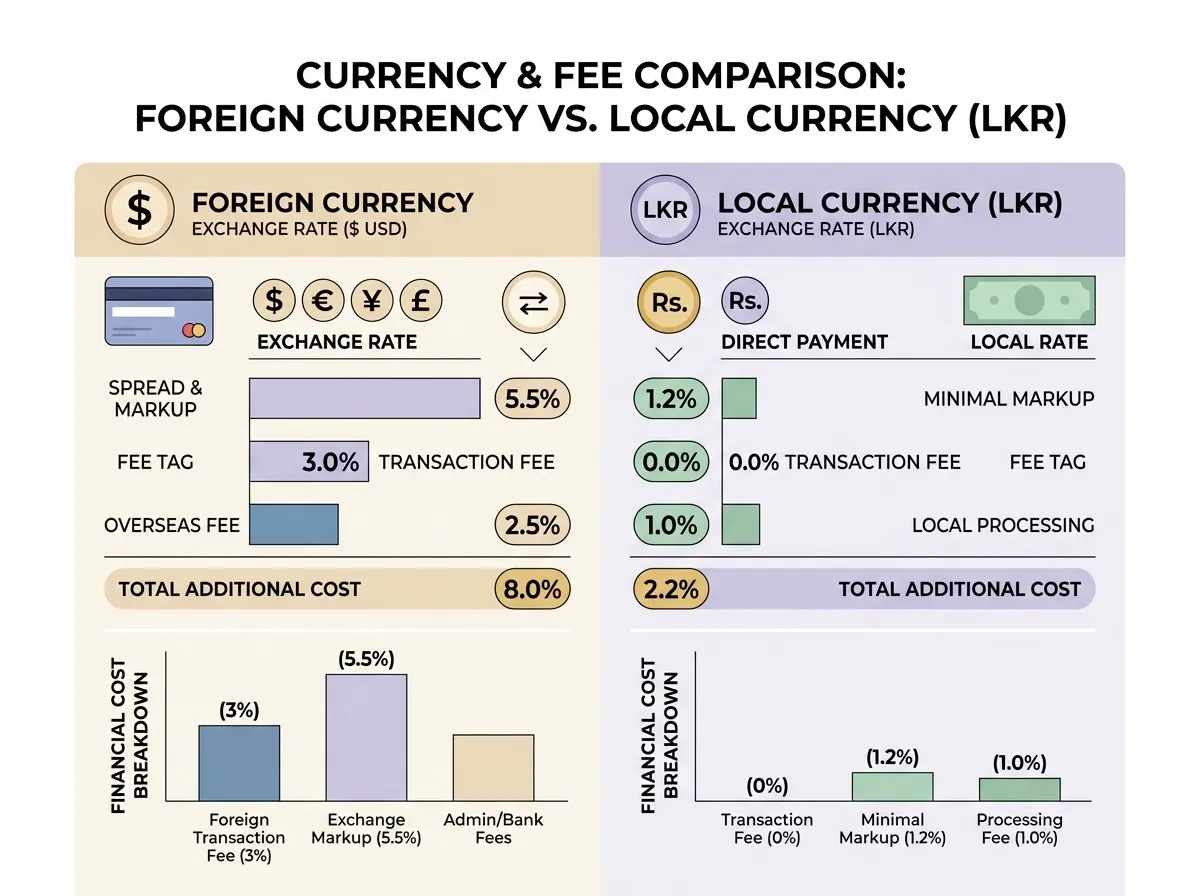
True Cost
A realistic breakdown of exchange rate markups, payment processing cuts, and why flat rupee billing protects independent merchant margins.
Local Pay
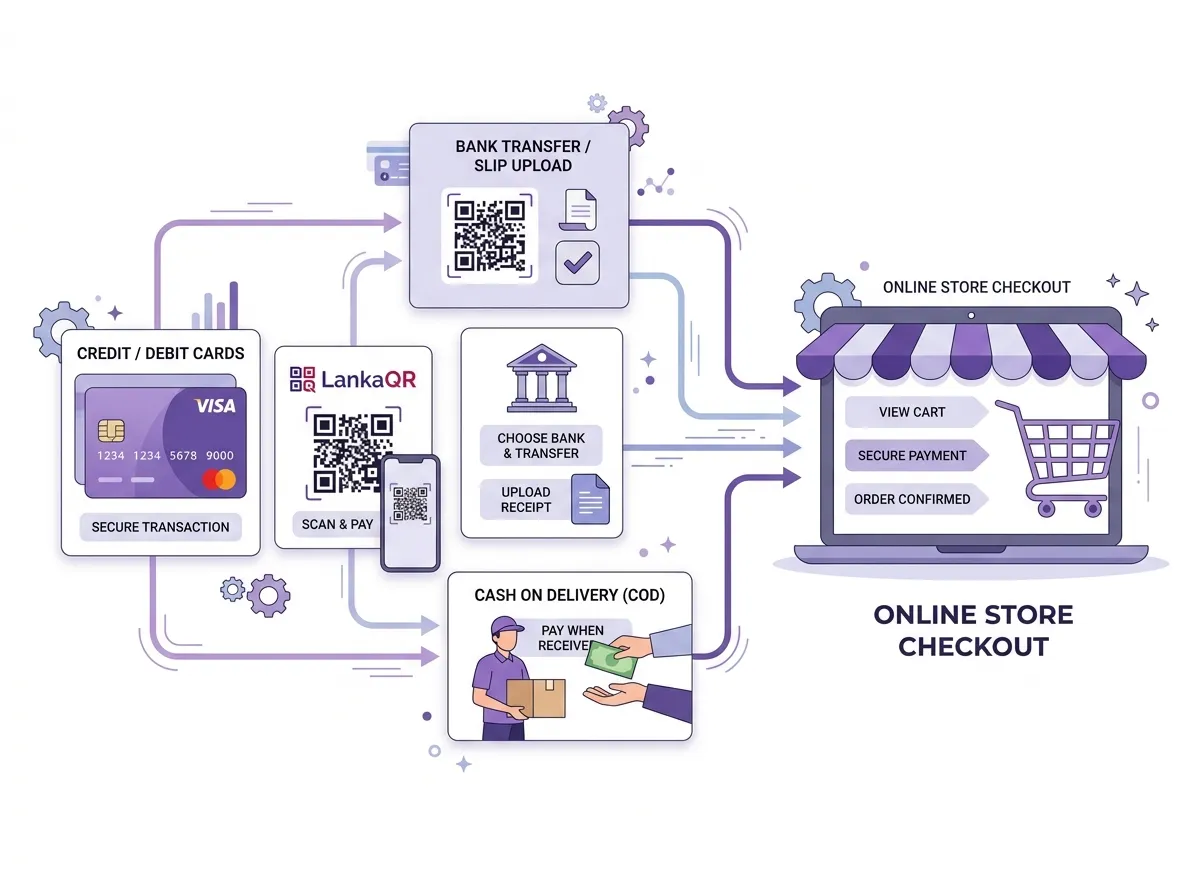
A complete breakdown of PayHere, WebXpay, manual slip verification, Cash on Delivery, and installment options like Koko and Mintpay.