The True Cost of Selling Online in Sri Lanka
A realistic breakdown of exchange rate markups, payment processing cuts, and why flat rupee billing protects independent merchant margins.
Key Takeaways
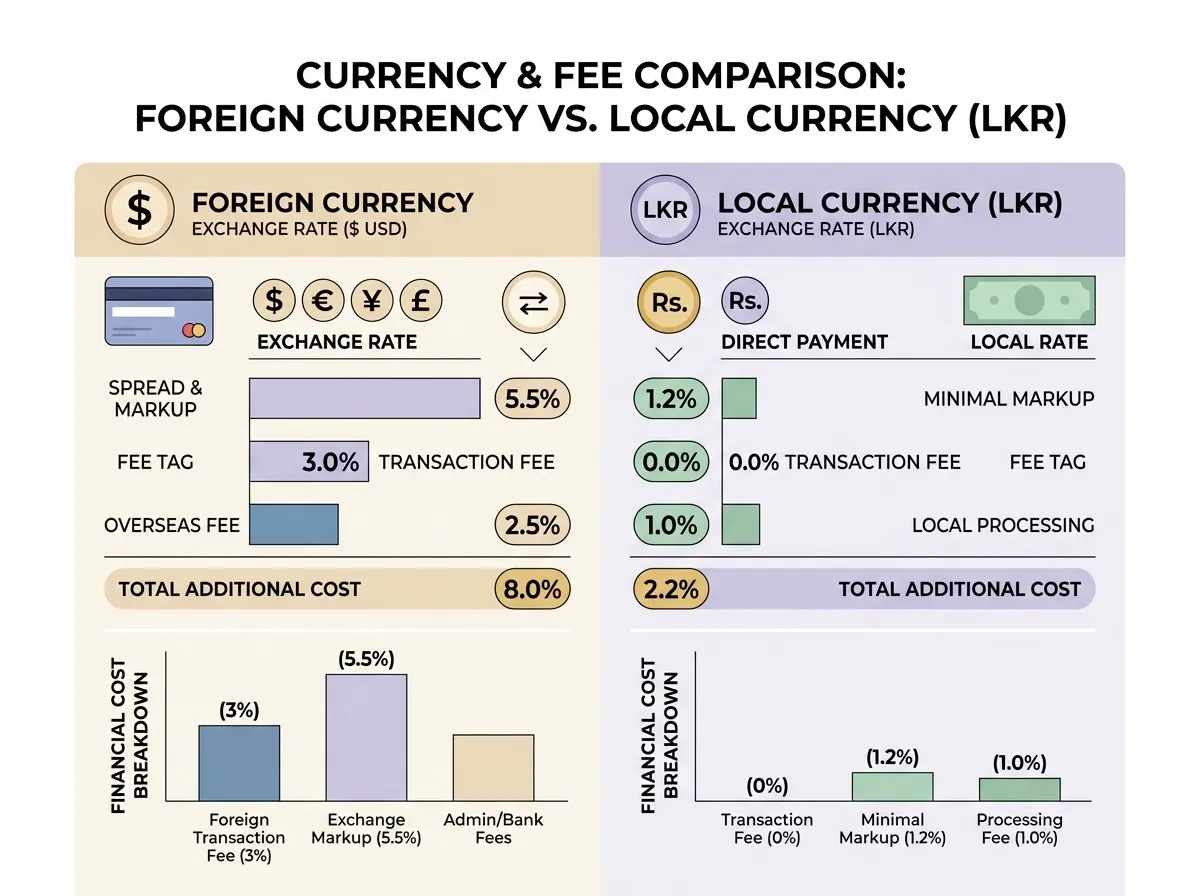
- Foreign currency billing exposes Sri Lankan businesses to bank exchange fees of 1.5% to 3.5% on every monthly charge.
- Hidden app add-ons for essential features like local delivery or WhatsApp chat can double your monthly software bill.
- Predictable LKR subscriptions keep operating overhead stable even when the rupee fluctuates.
- Local payment gateways usually charge between 2.4% and 3.3% per successful transaction with no foreign currency penalty.
The hidden markup on foreign software invoices
Most store owners start their calculations with the sticker price they see on international websites. A plan listed at $29 or $39 a month sounds manageable on paper. What banks actually deduct from a Sri Lankan credit card is rarely that simple.
Local commercial banks apply a cross-border transaction fee between 1.5% and 3.5% on foreign currency payments. On top of that, card issuers use their own daily conversion rates rather than the central bank spot rate. When the rupee moves against the dollar, your monthly software expense climbs without any change to your plan or sales volume.
For a small boutique or handmade crafts brand doing 200,000 LKR in monthly gross revenue, software costs billed in foreign currencies can silently eat up 8% to 12% of total net profits before advertising or packaging are even paid for.
The plugin trap: paying extra for basic local needs
Global store platforms are built around American and European fulfillment networks. They assume every business ships with FedEx or UPS and charges cards automatically through Stripe. In Sri Lanka, retail operates on Cash on Delivery, WhatsApp inquiries, and domestic couriers like Koombiyo and Domex.
To get those essentials running on a generic international platform, merchants must install third-party plugins. A plugin for cash on delivery fees costs $5 a month. A WhatsApp order button plugin costs another $9 a month. A custom form for bank deposit slip uploads costs $12 a month. Within three months, a basic $29 store easily balloons to $65 or $80 every billing cycle.
Choosing a platform that includes cash on delivery, bank transfer slip verification, and domestic courier waybills out of the box cuts those recurring addon fees down to zero.
Transaction fees vs payment gateway fees
Many merchants confuse gateway processing fees with platform transaction fees. A payment gateway like PayHere or WebXpay charges roughly 2.4% to 3.3% per successful card swipe to process the money into your commercial bank account. That is standard banking infrastructure.
The problem arises when an e-commerce platform takes an additional cut on top of the gateway fee. Some international platforms impose an extra 1% to 2% penalty fee if you do not use their proprietary payment system, which is not even available in Sri Lanka. Choosing an e-commerce solution with 0% platform commission ensures you only pay the actual gateway processing cost.
How to budget your first year of online selling
A healthy financial setup for a new Sri Lankan brand should keep fixed software costs under 6,000 LKR per month. Variable costs should scale directly with orders rather than eating into your initial working capital.
Keep domain renewals in mind. A registered .lk domain runs around 3,000 to 5,000 LKR annually and builds substantial trust with local buyers. When paired with a flat-rate local store builder, your total technical overhead stays predictable all year long.
Frequently Asked Questions
Why do Sri Lankan banks charge extra on foreign software subscriptions?
Banks apply a cross-border fee (typically 1.5% to 3.5%) and convert foreign currencies using their retail selling rate rather than the mid-market rate. Some banks also apply stamp duty on overseas card transactions.
Is it cheaper to build on a local platform or an international one?
For Sri Lankan businesses selling locally, a local platform is almost always more cost-effective because pricing is locked in LKR, built-in features replace expensive third-party plugins, and there are no currency conversion penalties.
Start selling online with Storzy LK
14-day free trial. Zero code. Instant PayHere, COD, and courier waybills.
More merchant guides
View all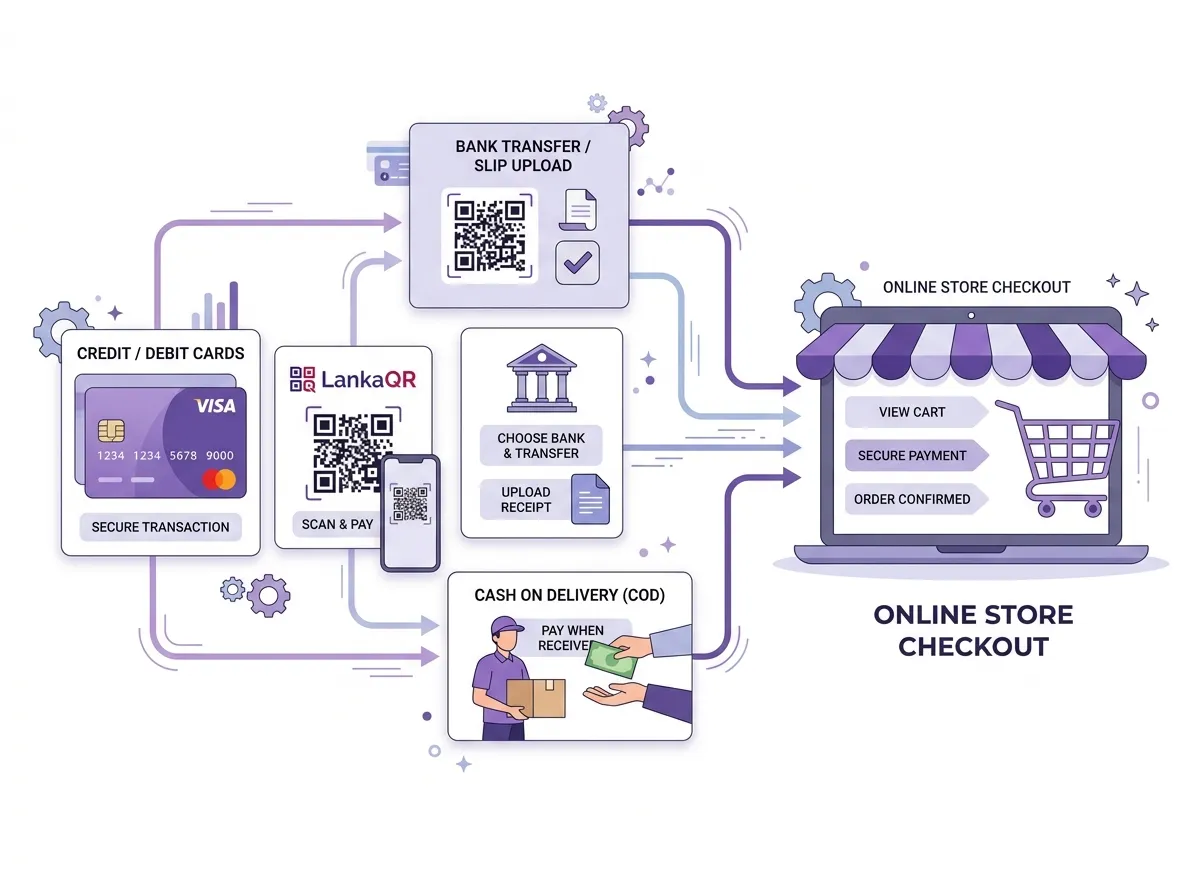
Local Pay
A complete breakdown of PayHere, WebXpay, manual slip verification, Cash on Delivery, and installment options like Koko and Mintpay.
DM to Desk
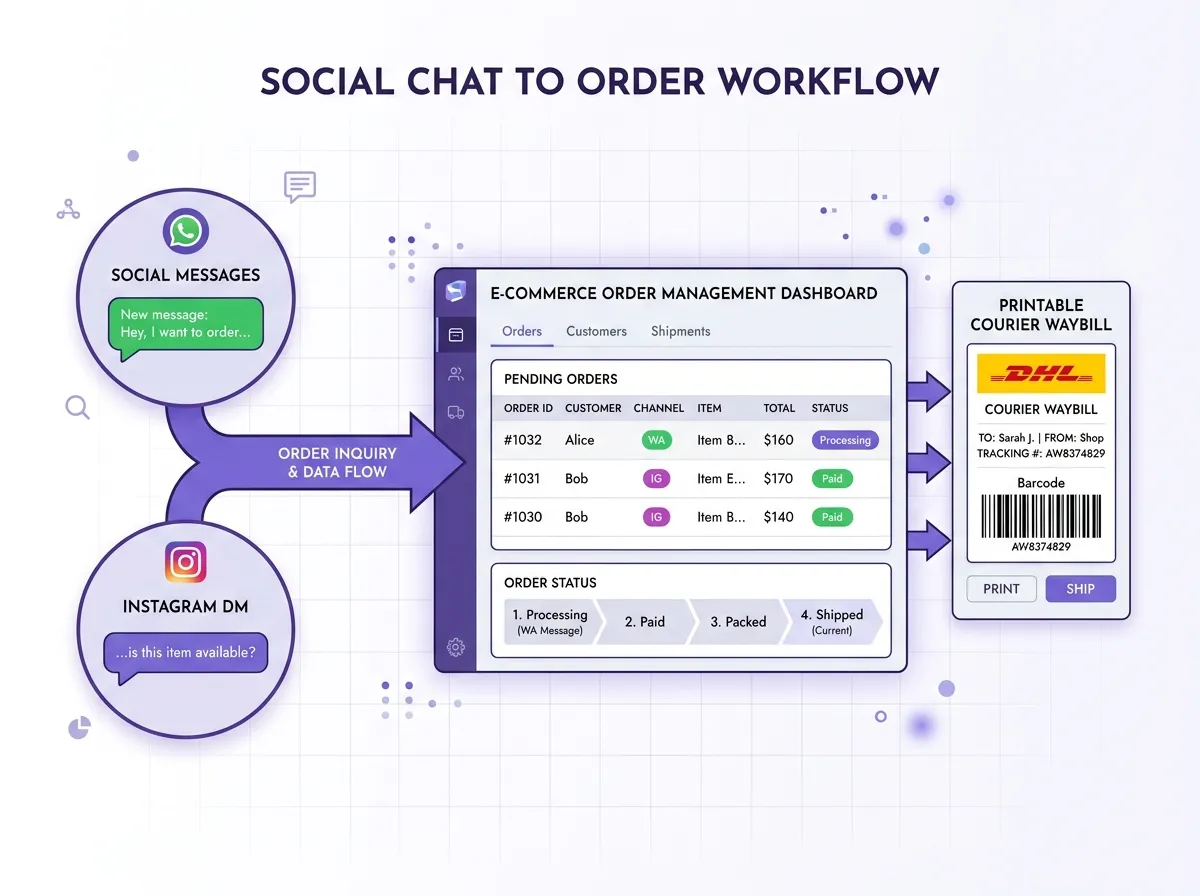
How growing fashion, food, and craft brands turn chaotic message threads into organized, automated orders with one-click courier waybills.